Origin
Two fires. One standard.
Every rifle is defined by its specifications. Material grades, machining tolerances, torque values, headspace dimensions. Published numbers that are either verified at the bench or taken on faith. We chose verification. Every tolerance measured, every value recorded, every step documented before the next begins.
Hearth to Forge started with a straightforward question: what does a rifle look like when you refuse to skip steps? Not a theoretical exercise. A real answer, built on a real bench, with a gauging record attached.
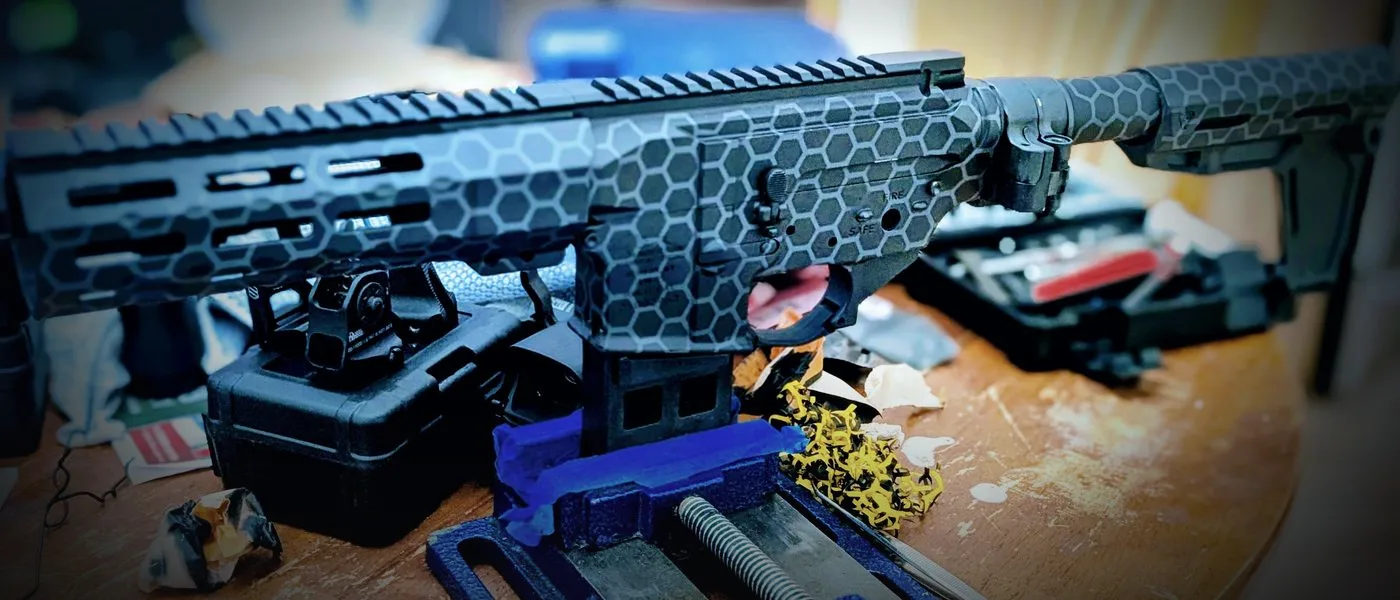
The name comes from two fires. A hearth keeps a home warm. A forge turns stock into something useful. Both require tending. Neither tolerates neglect.
Capabilities
AR-15 Assembly & Manufacturing
- Complete upper and lower receiver assembly, torqued to spec with calibrated tooling
- Headspace and gauge verification on every unit
- Cerakote ceramic coating, curing, and finish inspection
- Laser serialization and compliance marking
- Component-level provenance documentation, receiver to muzzle
- Per-unit build records: measurements, torque values, pass/fail, archived
Process
From component to crate.
Incoming Inspection
Components inspected and measured on receipt. Anything outside spec gets rejected and sent back.
Receiver Preparation
Serialized, marked, finished. Cerakote applied, cured, and surface-inspected before assembly starts.
Assembly
Built by hand. Fasteners torqued to spec with calibrated tools. Headspace gauged. Gas system timed. Build sheet filled out at every step.
Quality Control
Function check. Visual inspection. Build records reviewed for completeness. Nothing ships without full documentation.
Documentation & Shipping
Provenance packet compiled. Unit photographed. Packed and shipped with its complete build history.
Missoula, Montana